

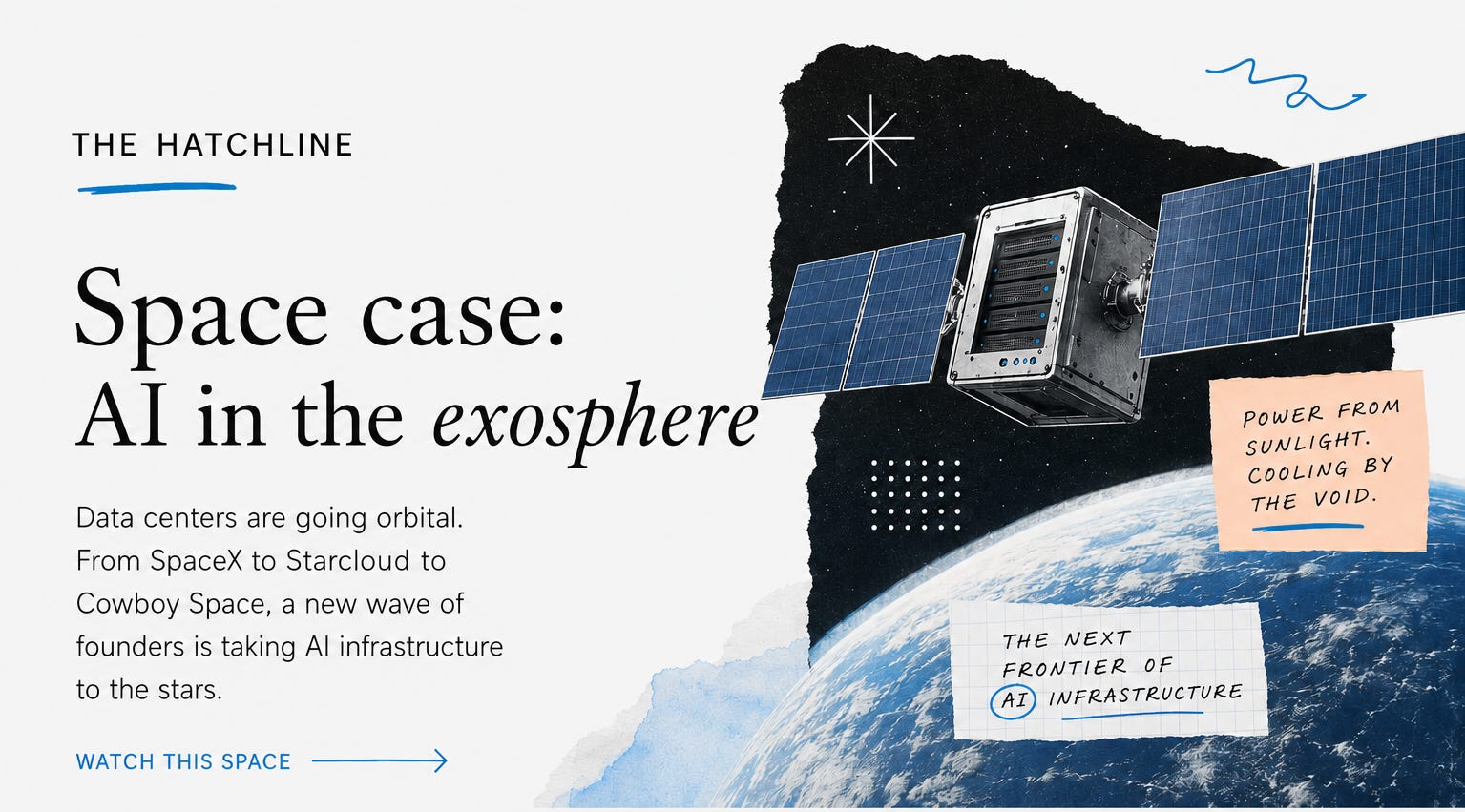
Space case: AI in the exosphere
Hope you’ve recovered from a weekend of celebrating a historic win for the Knicks.
The markets have also been rallying fresh off the SpaceX IPO. If you ask us, we think the conversations around spacetech are just heating up. With Anthropic and OpenAI IPOs on the horizon, the debates around data centers, where and how to build them and their environmental impacts, are inescapable. So let’s dive into the new space race.
The cloud is moving to the stars
Data centers are land-hungry, water-hungry, and increasingly power-hungry in places that don’t have the resources to spare. A recent report by UN researchers estimates that data center power consumption could double by 2030, reaching up to 945 TWh annually — the equivalent of the entire Japanese grid. According to the same report, data centers consumed 4.5 trillion liters of water last year – enough to meet the needs of more than 600 million people in Sub-Saharan Africa – and that amount is expected to double to 9.3 trillion liters by 2030.
Unsurprisingly, communities are pushing back. And policymakers are promoting anti-data center agendas. But plans for data center build-outs won’t be slowing down.
Some estimates claim the largest AI companies will spend $700 billion on data center infrastructure, which Fortune notes is “even more than the total inflation-adjusted cost of the U.S. Apollo program, which sent humans to the moon—twice over.” And depending on who you ask, that could be a conservative projection. McKinsey research shows it could balloon to $6.7 trillion by 2030.
So perhaps it’s only natural that a growing crowd of founders are looking at that space-sized budget and taking literal moonshots.
The idea behind Orbital data centers (ODCs) is to park a satellite in orbit, wrap it in solar panels, and let it soak up the sun’s free, abundant power. And instead of raiding the local water supply for cooling, the waste heat simply radiates into the void.
While SpaceX is driving a lot of the conversation, they’re far from the only players:
Google’s Project Suncatcher — announced in November 2025, the ultimate goal is running Google’s proprietary TPUs in solar-powered ODCs. They partnered up with Planet to launch two prototype satellites next year, and the latest reports suggest they may become frenemies with SpaceX, as they partner with the potential competitor.
Starcloud — achieved unicorn status just 17 months after its Y Combinator demo day with a $170M Series A led by Benchmark and EQT Ventures. It launched its first satellite carrying an Nvidia H100 GPU in November 2025 and was the first to train an AI model in space.
Cowboy Space — formerly known as Aetherflux, Robinhood co-founder Baiju Bhatt’s outfit recently closed a $275 million Series B at a $2 billion valuation, led by Index Ventures. The twist: there aren’t enough rockets to put data centers in orbit, so the company is standing up its own multi-stage rocket program to build the data center directly into the second stage. Their first rocket launch is targeted for 2028.
Axiom Space — while most well-known for its plans to build a commercial space station to succeed the ISS, the company started developing ODC capabilities way back in 2022. Fast forward, and as of January this year, they’ve launched their first two free-flying data center nodes into low-Earth orbit, with a further node bound for the ISS in 2027.
Blue Origin’s “Project Sunrise” — last but not least, Bezos entered the chat this March with Project Sunrise. His FCC filing requested permission to launch a network of 50,000+ satellites, however, NASA recently submitted an objection to the application, potentially complicating matters.
You might think the cost of running a data center in space would be astronomical, but if all goes according to plan, it could be surprisingly down to earth. Starcloud CEO Philip Johnston says he expects to be cost-competitive at around $0.05 per kilowatt-hour.
It’s still early days, but we’ll be keeping an eye on these companies that are pushing new frontiers of AI in the exosphere. Watch this space. 🛰️
📚 What we’re reading
...Or will be reading soon – Fire up your Goodreads account, it’s summer reading list season. From the NYT’s Summer Reading Bucket List, to The New Yorker’s The Best Books of 2026 So Far, to The Information’s 20 Great Books for Summer 2026, our “to be read” list is getting a bit out of hand. One “must read” from our team is How to Rule the World by Theo Baker.
Liar Liar – Who needs another podcast? VC media is entering its reality TV competition era with the Founders Fund game of Mafia.
Alone, together – Loneliness Influencers are taking over TikTok, turning the old “highlight reel” effect of social media on its head.
Tech bro, but make it fashion – It’s time to trade in those T-shirts, hoodies and Patagonia puffer vests. Silicon Valley fashion is now all about the military-grade suit and tie.
IRL Summer is Here – A who’s who of Gen Z trendsetters makes predictions for the trends of summer, from IRL Energy to domestic travel to everyone suddenly caring about sports.
📅 Upcoming events
Now through July 19 – FIFA World Cup – Move over NBA, soccer (or football, for the rest of the world) is about to become the sports conversation you can’t escape for the next month.
June 16 – YC Demo Day – check out the latest batch of startups whose names you’ll be hearing more about soon
June 17 - 20 – VivaTech – If you’re in Paris, be sure to check out ICONIQ’s session with Adaptive ML and IRIS discussing what it takes for European startups to scale globally.
June 22 - 26 – Cannes Lions – And while you’re at it, extend the trip and take a jaunt over to Cannes to check out the best in creative and marketing.
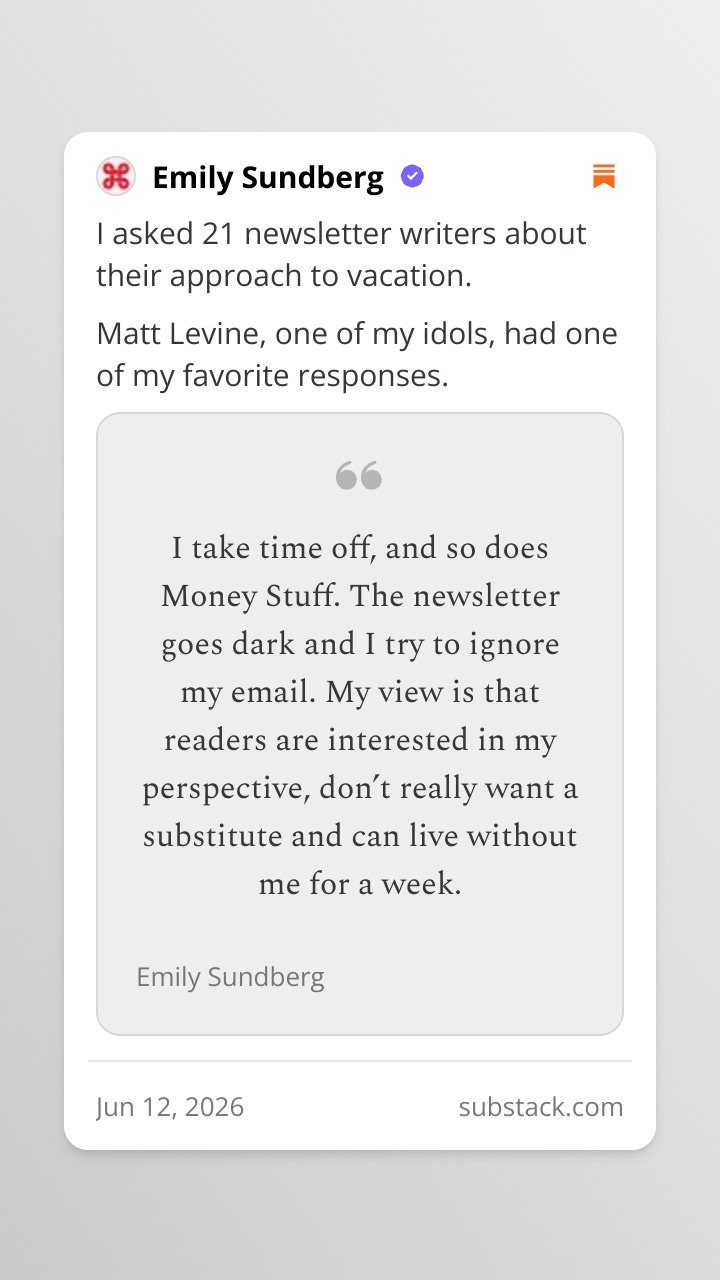
🧠 Words of wisdom
That’s all for this week. Until next time, send your summer reading lists, trend forecasts, and party games that VCs should try next to hatchline@thehatchagency.com